
smallness in Japanese
Do you know smallness in Japanese? How to use smallness in Japanese and how to say smallness in Japanese? How to write smallness in Japanese? Now let's learn how to say smallness in Japanese language.
smallness translate to Japanese meanings: 小ささ.
In other words, 小ささ in Japanese is smallness in English.Click to pronunce
| English | Japanese |

|
|
| smallness | 小ささ |
How to use smallness in Japanese?
Meaning of smallness in Japanese language is: 小ささ.
Other words in Japanese
soiling, Statt, Sutherland, sacramental, schools,
Read more Synonyms and Antonyms of smallness
Why we should learn Japanese language?
There are many, many reasons why learning a new language is a good idea. It allows you to communicate with new people. It helps you to see things from a different perspective, or get a deeper understanding of another culture. It helps you to become a better listener. It even has health benefits, as studies have shown that people who speak two or more languages have more active minds later in life!
7 reasons to learn a Japanese language
- Makes you smarter.
- Boosts academic achievement.
- Provides professional and career advantages.
- Provides broader access to education and information.
- Gives you more social and global skills.
- Increases national security.
- Life is more interesting.
How to say smallness in Japanese?
小ささ. This is your most common way to say smallness in 小ささ language. Click audio icon to pronounce smallness in Japanese::
| English | Japanese |
|
|
|
| smallness | 小ささ |
How to write smallness in Japanese?
The standard way to write "smallness" in Japanese is: 小ささ
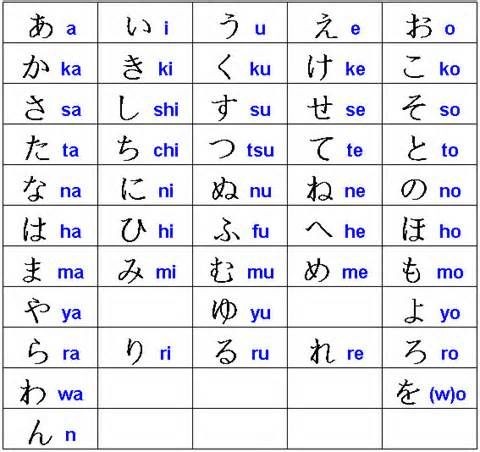
Alphabet in Japanese
About Japanese language
See more about Japanese language in here.
Japanese (日本語, Nihongo [ɲihoŋɡo] (About this soundlisten)) is an East Asian language spoken by about 128 million people, primarily in Japan, where it is the national language. It is a member of the Japonic (or Japanese-Ryukyuan) language family, and its ultimate derivation and relation to other languages such as Korean is unclear. Japonic languages have been grouped with other language families such as Ainu, Austroasiatic, and the now-discredited Altaic, but none of these proposals has gained widespread acceptance.
Little is known of the language's prehistory, or when it first appeared in Japan. Chinese documents from the 3rd century AD recorded a few Japanese words, but substantial texts did not appear until the 8th century. During the Heian period (794–1185) in Japan, the Chinese language had considerable influence on the vocabulary and phonology of Old Japanese. Late Middle Japanese (1185–1600) included changes in features that brought it closer to the modern language, and the first appearance of European loanwords. The standard dialect moved from the Kansai region in the south, up to the Edo region (modern Tokyo) in the Early Modern Japanese period (early 17th century–mid 19th century). Following the end of Japan's self-imposed isolation in 1853, the flow of loanwords from European languages increased significantly. English loanwords, in particular, have become frequent, and Japanese words from English roots have proliferated..
Writing system in Japanese
Mixed scripts of Kanji (Chinese character) and Kana (Hiragana, Katakana), Japanese Braille
Japanese Speaking Countries and Territories
Japanese Speaking Countries and Territories: Japan.

Japanese native speakers
Japanese native speakers: 128 million (2020).
Japanese language code
Japanese language code is: ja.
Conclusion on smallness in Japanese
Now that you have learned and understood the common ways of saying smallness in Japanese is "小ささ", it's time to learn how to say smallness in Japanese. This will hopefully give you a little motivation to study Japanese today.
小ささ in Japanese meanings smallness in English.