
Habituation in Thai
Do you know Habituation in Thai? How to use Habituation in Thai and how to say Habituation in Thai? How to write Habituation in Thai? Now let's learn how to say Habituation in Thai language.
Habituation translate to Thai meanings: การทำให้เกิดความเคยชิน.
In other words, การทำให้เกิดความเคยชิน in Thai is Habituation in English.Click to pronunce
| English | Thai |

|
|
| Habituation | การทำให้เกิดความเคยชิน |
How to use Habituation in Thai?
Meaning of Habituation in Thai language is: การทำให้เกิดความเคยชิน.
Other words in Thai
Harmfully, Hubcaps, Headlining, Hijab, Historical,
Read more Synonyms and Antonyms of Habituation
Why we should learn Thai language?
There are many, many reasons why learning a new language is a good idea. It allows you to communicate with new people. It helps you to see things from a different perspective, or get a deeper understanding of another culture. It helps you to become a better listener. It even has health benefits, as studies have shown that people who speak two or more languages have more active minds later in life!
7 reasons to learn a Thai language
- Makes you smarter.
- Boosts academic achievement.
- Provides professional and career advantages.
- Provides broader access to education and information.
- Gives you more social and global skills.
- Increases national security.
- Life is more interesting.
How to say Habituation in Thai?
การทำให้เกิดความเคยชิน. This is your most common way to say Habituation in การทำให้เกิดความเคยชิน language. Click audio icon to pronounce Habituation in Thai::
| English | Thai |
|
|
|
| Habituation | การทำให้เกิดความเคยชิน |
How to write Habituation in Thai?
The standard way to write "Habituation" in Thai is: การทำให้เกิดความเคยชิน
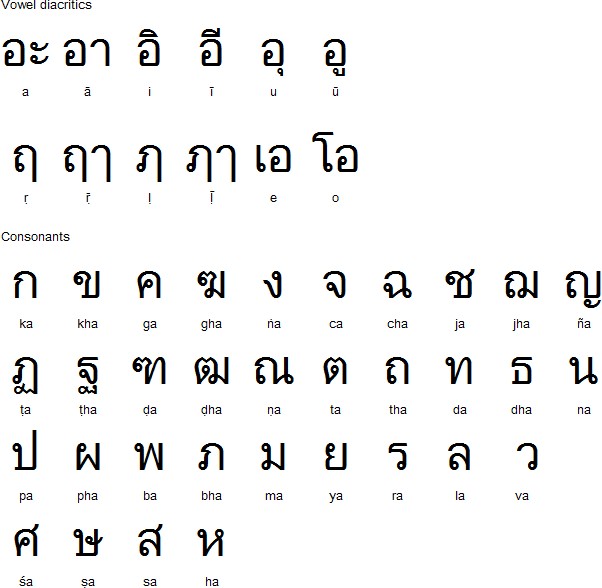
Alphabet in Thai
About Thai language
See more about Thai language in here.
Thai,[a] Central Thai[b] (historically Siamese;[c] Thai: ภาษาไทย), is a Tai language of the Kra–Dai language family spoken by Central Thai people.[d] It is the national language of Thailand and de facto official language.
Thai is the most spoken of over 60 languages of Thailand by both number of native and overall speakers. Over half of its vocabulary is derived from or borrowed from Pali, Sanskrit, Mon and Old Khmer. It is a tonal and analytic language, similar to Chinese and Vietnamese.
Thai has a complex orthography and system of relational markers. Spoken Thai, depending on standard sociolinguistic factors such as age, gender, class, spatial proximity, and the urban/rural divide, is partly mutually intelligible with Lao, Isan, and some fellow Southwestern Tai languages. These languages are written with slightly different scripts but are linguistically similar and effectively form a dialect continuum..
Writing system in Thai
Thai script, Thai Braille
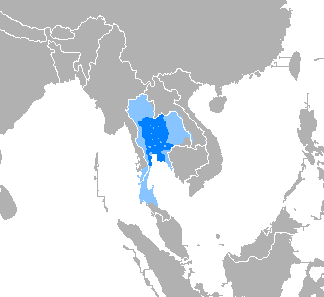
Thai Speaking Countries and Territories
Thai Speaking Countries and Territories: Thailand, Malaysia (Kedah, Perlis, Kelantan and Hulu Perak), Myanmar (Tanintharyi), Cambodia (Koh Kong District).
Thai native speakers
Thai native speakers: 20–36 million (2000), 44 million L2 speakers with Lanna, Isan, Southern Thai, Northern Khmer and Lao (2001).
Thai language code
Thai language code is: th.
Conclusion on Habituation in Thai
Now that you have learned and understood the common ways of saying Habituation in Thai is "การทำให้เกิดความเคยชิน", it's time to learn how to say Habituation in Thai. This will hopefully give you a little motivation to study Thai today.
การทำให้เกิดความเคยชิน in Thai meanings Habituation in English.