
Compulsoriness in Thai
Do you know Compulsoriness in Thai? How to use Compulsoriness in Thai and how to say Compulsoriness in Thai? How to write Compulsoriness in Thai? Now let's learn how to say Compulsoriness in Thai language.
Compulsoriness translate to Thai meanings: ความเป็นเชิงบังคับ.
In other words, ความเป็นเชิงบังคับ in Thai is Compulsoriness in English.Click to pronunce
| English | Thai |

|
|
| Compulsoriness | ความเป็นเชิงบังคับ |
How to use Compulsoriness in Thai?
Meaning of Compulsoriness in Thai language is: ความเป็นเชิงบังคับ.
Other words in Thai
Ceases, Combatting, Contaminates, Catamaran, Cancelation,
Read more Synonyms and Antonyms of Compulsoriness
Why we should learn Thai language?
There are many, many reasons why learning a new language is a good idea. It allows you to communicate with new people. It helps you to see things from a different perspective, or get a deeper understanding of another culture. It helps you to become a better listener. It even has health benefits, as studies have shown that people who speak two or more languages have more active minds later in life!
7 reasons to learn a Thai language
- Makes you smarter.
- Boosts academic achievement.
- Provides professional and career advantages.
- Provides broader access to education and information.
- Gives you more social and global skills.
- Increases national security.
- Life is more interesting.
How to say Compulsoriness in Thai?
ความเป็นเชิงบังคับ. This is your most common way to say Compulsoriness in ความเป็นเชิงบังคับ language. Click audio icon to pronounce Compulsoriness in Thai::
| English | Thai |
|
|
|
| Compulsoriness | ความเป็นเชิงบังคับ |
How to write Compulsoriness in Thai?
The standard way to write "Compulsoriness" in Thai is: ความเป็นเชิงบังคับ
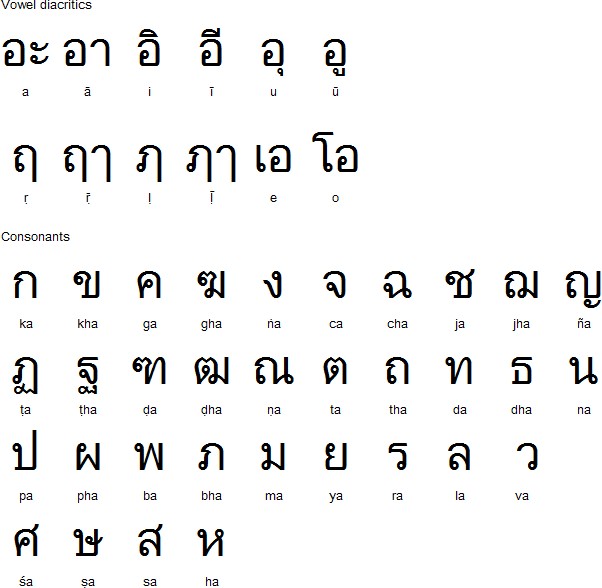
Alphabet in Thai
About Thai language
See more about Thai language in here.
Thai,[a] Central Thai[b] (historically Siamese;[c] Thai: ภาษาไทย), is a Tai language of the Kra–Dai language family spoken by Central Thai people.[d] It is the national language of Thailand and de facto official language.
Thai is the most spoken of over 60 languages of Thailand by both number of native and overall speakers. Over half of its vocabulary is derived from or borrowed from Pali, Sanskrit, Mon and Old Khmer. It is a tonal and analytic language, similar to Chinese and Vietnamese.
Thai has a complex orthography and system of relational markers. Spoken Thai, depending on standard sociolinguistic factors such as age, gender, class, spatial proximity, and the urban/rural divide, is partly mutually intelligible with Lao, Isan, and some fellow Southwestern Tai languages. These languages are written with slightly different scripts but are linguistically similar and effectively form a dialect continuum..
Writing system in Thai
Thai script, Thai Braille
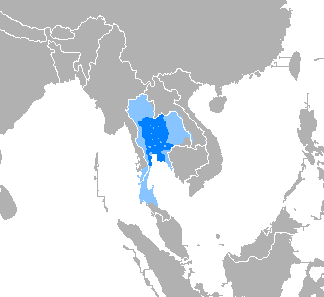
Thai Speaking Countries and Territories
Thai Speaking Countries and Territories: Thailand, Malaysia (Kedah, Perlis, Kelantan and Hulu Perak), Myanmar (Tanintharyi), Cambodia (Koh Kong District).
Thai native speakers
Thai native speakers: 20–36 million (2000), 44 million L2 speakers with Lanna, Isan, Southern Thai, Northern Khmer and Lao (2001).
Thai language code
Thai language code is: th.
Conclusion on Compulsoriness in Thai
Now that you have learned and understood the common ways of saying Compulsoriness in Thai is "ความเป็นเชิงบังคับ", it's time to learn how to say Compulsoriness in Thai. This will hopefully give you a little motivation to study Thai today.
ความเป็นเชิงบังคับ in Thai meanings Compulsoriness in English.