
formalisation in Tajik
Do you know formalisation in Tajik? How to use formalisation in Tajik and how to say formalisation in Tajik? How to write formalisation in Tajik? Now let's learn how to say formalisation in Tajik language.
formalisation translate to Tajik meanings: расмиёти.
In other words, расмиёти in Tajik is formalisation in English.Click to pronunce
| English | Tajik |

|
|
| formalisation | расмиёти |
How to use formalisation in Tajik?
Meaning of formalisation in Tajik language is: расмиёти.
Other words in Tajik
fix, forcefully, fog, fears, Flor,
Read more Synonyms and Antonyms of formalisation
Why we should learn Tajik language?
There are many, many reasons why learning a new language is a good idea. It allows you to communicate with new people. It helps you to see things from a different perspective, or get a deeper understanding of another culture. It helps you to become a better listener. It even has health benefits, as studies have shown that people who speak two or more languages have more active minds later in life!
7 reasons to learn a Tajik language
- Makes you smarter.
- Boosts academic achievement.
- Provides professional and career advantages.
- Provides broader access to education and information.
- Gives you more social and global skills.
- Increases national security.
- Life is more interesting.
How to say formalisation in Tajik?
расмиёти. This is your most common way to say formalisation in расмиёти language. Click audio icon to pronounce formalisation in Tajik::
| English | Tajik |
|
|
|
| formalisation | расмиёти |
How to write formalisation in Tajik?
The standard way to write "formalisation" in Tajik is: расмиёти
Alphabet in Tajik
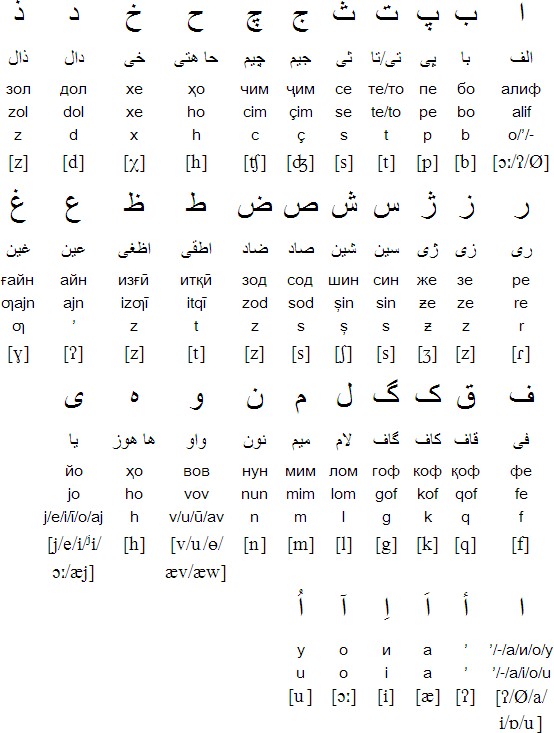
About Tajik language
See more about Tajik language in here.
Tajik or Tajiki (Tajik: забо́ни тоҷикӣ́, zaboni tojikī, [zaˈbɔni tɔdʒiˈki]), also called Tajiki Persian (Tajik: форси́и тоҷикӣ́, forsii tojikī, [fɔrˈsiji tɔdʒiˈki], Persian: تاجیکی, Tajik or Tadzhik) and Tadzhiki, is the variety of Persian spoken in Tajikistan and Uzbekistan by Tajiks. It is closely related to neighbouring Dari Persian with which it forms a continuum of mutually intelligible varieties. Since the beginning of the twentieth century and independence of Tajikistan from the Soviet Union, Tajik has been considered by a number of writers and researchers to be a variety of Persian.[clarification needed] The popularity of this conception of Tajik as a variety of Persian was such that, during the period in which Tajik intellectuals were trying to establish Tajik as a language separate from Persian, Sadriddin Ayni, who was a prominent intellectual and educator, made a statement that Tajik was not a "bastardised dialect" of Persian. The issue of whether Tajik and Persian are to be considered two dialects of a single language or two discrete languages has political sides to it (see Perry 1996)..
Writing system in Tajik
Cyrillic, Latin, Persian (historically), Tajik Braille
Tajik Speaking Countries and Territories
Tajik Speaking Countries and Territories: Tajikistan and Uzbekistan.
Tajik native speakers
Tajik native speakers: 8.1 million (6.4 million in Tajikistan, 2012 UNSD) (2012).
Tajik language code
Tajik language code is: tg.
Conclusion on formalisation in Tajik
Now that you have learned and understood the common ways of saying formalisation in Tajik is "расмиёти", it's time to learn how to say formalisation in Tajik. This will hopefully give you a little motivation to study Tajik today.
расмиёти in Tajik meanings formalisation in English.