
Havemoneytoplaywith in Swahili
Do you know Havemoneytoplaywith in Swahili? How to use Havemoneytoplaywith in Swahili and how to say Havemoneytoplaywith in Swahili? How to write Havemoneytoplaywith in Swahili? Now let's learn how to say Havemoneytoplaywith in Swahili language.
Havemoneytoplaywith translate to Swahili meanings: kuwa na fedha kwa kucheza na.
In other words, kuwa na fedha kwa kucheza na in Swahili is Havemoneytoplaywith in English.Click to pronunce
| English | Swahili |

|
|
| Havemoneytoplaywith | kuwa na fedha kwa kucheza na |
How to use Havemoneytoplaywith in Swahili?
Meaning of Havemoneytoplaywith in Swahili language is: kuwa na fedha kwa kucheza na.
Other words in Swahili
Hogringer, Haveknownbetterdays, Haveanaceupsleeve, Halfripe, Hard,
Why we should learn Swahili language?
There are many, many reasons why learning a new language is a good idea. It allows you to communicate with new people. It helps you to see things from a different perspective, or get a deeper understanding of another culture. It helps you to become a better listener. It even has health benefits, as studies have shown that people who speak two or more languages have more active minds later in life!
7 reasons to learn a Swahili language
- Makes you smarter.
- Boosts academic achievement.
- Provides professional and career advantages.
- Provides broader access to education and information.
- Gives you more social and global skills.
- Increases national security.
- Life is more interesting.
How to say Havemoneytoplaywith in Swahili?
kuwa na fedha kwa kucheza na. This is your most common way to say Havemoneytoplaywith in kuwa na fedha kwa kucheza na language. Click audio icon to pronounce Havemoneytoplaywith in Swahili::
| English | Swahili |
|
|
|
| Havemoneytoplaywith | kuwa na fedha kwa kucheza na |
How to write Havemoneytoplaywith in Swahili?
The standard way to write "Havemoneytoplaywith" in Swahili is: kuwa na fedha kwa kucheza na
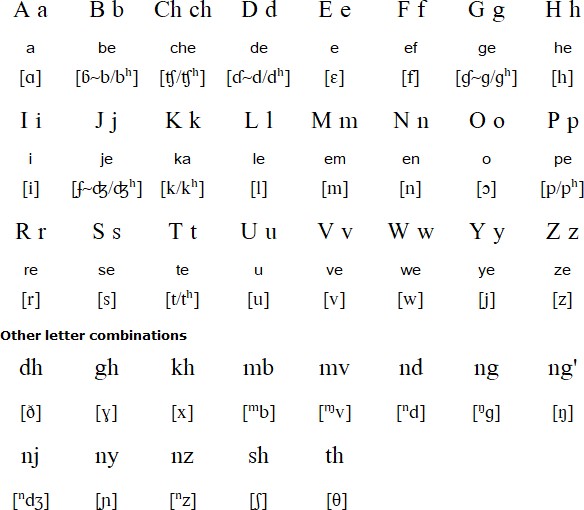
Alphabet in Swahili
About Swahili language
See more about Swahili language in here.
Swahili, also known by its native name Kiswahili, is a Bantu language and the native language of the Swahili people. It is a lingua franca of the African Great Lakes region and other parts of East and Southern Africa, including Tanzania, Uganda, Rwanda, Burundi, Kenya, some parts of Malawi, Somalia, Zambia, Mozambique, and the Democratic Republic of the Congo (DRC). Comorian, spoken in the Comoros Islands, is sometimes considered a dialect of Swahili, although other authorities consider it a distinct language. Sheng is a mixture of Swahili and English commonly spoken in Kenya and parts of Uganda. Swahili has a 16–20% Arabic loanwords in the language, including the word swahili, from Arabic sawāḥilī (سَوَاحِلي, a plural adjectival form of an Arabic word meaning 'of the coast'). The Arabic loanwords date from the contacts of Arabian traders with the Bantu inhabitants of the east coast of Africa over many centuries. Under Arab trade influence, Swahili emerged as a lingua franca used by Arab traders and Bantu peoples of the East African Coast..
Writing system in Swahili
Latin script (Roman Swahili alphabet), Arabic script (Arabic Swahili alphabet), Swahili Braille
Swahili Speaking Countries and Territories
Swahili Speaking Countries and Territories: Tanzania, Democratic Republic of the Congo, Bajuni Islands (part of Somalia), Mozambique (mostly Mwani), Burundi, Rwanda, Uganda, Kenya, Comoros, Mayotte, Zambia, Malawi, and Madagascar.

Swahili native speakers
Swahili native speakers: Estimates range from 2 million (2003) to 18 million (2012) L2 speakers: 90 million (1991–2015).
Swahili language code
Swahili language code is: sw.
Conclusion on Havemoneytoplaywith in Swahili
Now that you have learned and understood the common ways of saying Havemoneytoplaywith in Swahili is "kuwa na fedha kwa kucheza na", it's time to learn how to say Havemoneytoplaywith in Swahili. This will hopefully give you a little motivation to study Swahili today.
kuwa na fedha kwa kucheza na in Swahili meanings Havemoneytoplaywith in English.