
Hatbands in Swahili
Do you know Hatbands in Swahili? How to use Hatbands in Swahili and how to say Hatbands in Swahili? How to write Hatbands in Swahili? Now let's learn how to say Hatbands in Swahili language.
Hatbands translate to Swahili meanings: kofia bendi.
In other words, kofia bendi in Swahili is Hatbands in English.Click to pronunce
| English | Swahili |

|
|
| Hatbands | kofia bendi |
How to use Hatbands in Swahili?
Meaning of Hatbands in Swahili language is: kofia bendi.
Other words in Swahili
Heretics, Hydroxyzine, Hemopoietic, Householders, Havebyone,
Read more Synonyms and Antonyms of Hatbands
Why we should learn Swahili language?
There are many, many reasons why learning a new language is a good idea. It allows you to communicate with new people. It helps you to see things from a different perspective, or get a deeper understanding of another culture. It helps you to become a better listener. It even has health benefits, as studies have shown that people who speak two or more languages have more active minds later in life!
7 reasons to learn a Swahili language
- Makes you smarter.
- Boosts academic achievement.
- Provides professional and career advantages.
- Provides broader access to education and information.
- Gives you more social and global skills.
- Increases national security.
- Life is more interesting.
How to say Hatbands in Swahili?
kofia bendi. This is your most common way to say Hatbands in kofia bendi language. Click audio icon to pronounce Hatbands in Swahili::
| English | Swahili |
|
|
|
| Hatbands | kofia bendi |
How to write Hatbands in Swahili?
The standard way to write "Hatbands" in Swahili is: kofia bendi
Alphabet in Swahili
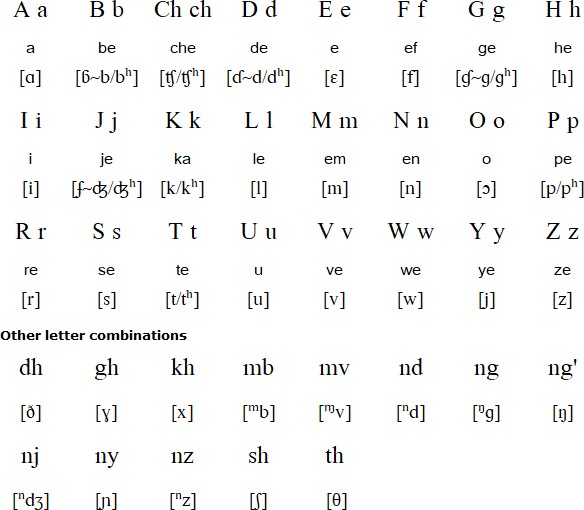
About Swahili language
See more about Swahili language in here.
Swahili, also known by its native name Kiswahili, is a Bantu language and the native language of the Swahili people. It is a lingua franca of the African Great Lakes region and other parts of East and Southern Africa, including Tanzania, Uganda, Rwanda, Burundi, Kenya, some parts of Malawi, Somalia, Zambia, Mozambique, and the Democratic Republic of the Congo (DRC). Comorian, spoken in the Comoros Islands, is sometimes considered a dialect of Swahili, although other authorities consider it a distinct language. Sheng is a mixture of Swahili and English commonly spoken in Kenya and parts of Uganda. Swahili has a 16–20% Arabic loanwords in the language, including the word swahili, from Arabic sawāḥilī (سَوَاحِلي, a plural adjectival form of an Arabic word meaning 'of the coast'). The Arabic loanwords date from the contacts of Arabian traders with the Bantu inhabitants of the east coast of Africa over many centuries. Under Arab trade influence, Swahili emerged as a lingua franca used by Arab traders and Bantu peoples of the East African Coast..
Writing system in Swahili
Latin script (Roman Swahili alphabet), Arabic script (Arabic Swahili alphabet), Swahili Braille
Swahili Speaking Countries and Territories
Swahili Speaking Countries and Territories: Tanzania, Democratic Republic of the Congo, Bajuni Islands (part of Somalia), Mozambique (mostly Mwani), Burundi, Rwanda, Uganda, Kenya, Comoros, Mayotte, Zambia, Malawi, and Madagascar.

Swahili native speakers
Swahili native speakers: Estimates range from 2 million (2003) to 18 million (2012) L2 speakers: 90 million (1991–2015).
Swahili language code
Swahili language code is: sw.
Conclusion on Hatbands in Swahili
Now that you have learned and understood the common ways of saying Hatbands in Swahili is "kofia bendi", it's time to learn how to say Hatbands in Swahili. This will hopefully give you a little motivation to study Swahili today.
kofia bendi in Swahili meanings Hatbands in English.