
Funeral knell in Lithuanian
Do you know Funeral knell in Lithuanian? How to use Funeral knell in Lithuanian and how to say Funeral knell in Lithuanian? How to write Funeral knell in Lithuanian? Now let's learn how to say Funeral knell in Lithuanian language.
Funeral knell translate to Lithuanian meanings: laidotuvių varpai.
In other words, laidotuvių varpai in Lithuanian is Funeral knell in English.Click to pronunce
| English | Lithuanian |

|
|
| Funeral knell | laidotuvių varpai |
How to use Funeral knell in Lithuanian?
Meaning of Funeral knell in Lithuanian language is: laidotuvių varpai.
Other words in Lithuanian
Failure, Flatlands, Frizzle, Fletcher s, Filthiness,
Read more Synonyms and Antonyms of Funeral knell
Why we should learn Lithuanian language?
There are many, many reasons why learning a new language is a good idea. It allows you to communicate with new people. It helps you to see things from a different perspective, or get a deeper understanding of another culture. It helps you to become a better listener. It even has health benefits, as studies have shown that people who speak two or more languages have more active minds later in life!
7 reasons to learn a Lithuanian language
- Makes you smarter.
- Boosts academic achievement.
- Provides professional and career advantages.
- Provides broader access to education and information.
- Gives you more social and global skills.
- Increases national security.
- Life is more interesting.
How to say Funeral knell in Lithuanian?
laidotuvių varpai. This is your most common way to say Funeral knell in laidotuvių varpai language. Click audio icon to pronounce Funeral knell in Lithuanian::
| English | Lithuanian |
|
|
|
| Funeral knell | laidotuvių varpai |
How to write Funeral knell in Lithuanian?
The standard way to write "Funeral knell" in Lithuanian is: laidotuvių varpai
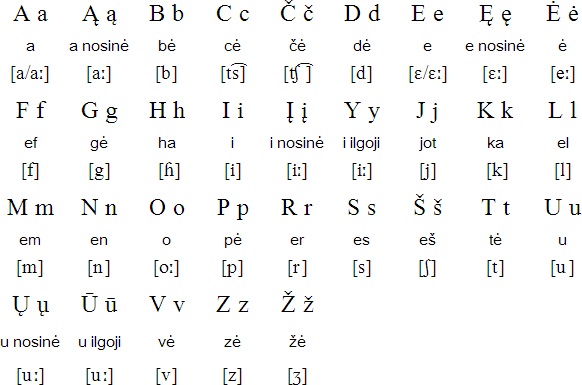
Alphabet in Lithuanian
About Lithuanian language
See more about Lithuanian language in here.
Lithuanian (Lithuanian: lietuvių kalba) is a Baltic language belonging to the Balto-Slavic branch of the Indo-European language family. It is the official language of Lithuania and one of the official languages of the European Union. There are about 2.8 million native Lithuanian speakers in Lithuania and about 200,000 speakers elsewhere.
Lithuanian is closely related to the neighbouring Latvian language. It is written in a Latin script. It is said to be the most conservative of the existing Indo-European languages, retaining features of the Proto-Indo-European language that had disappeared through development from other descendant languages.
The first known record of the name of Lithuania (Lithuanian: Lietuva) is in a 9 March 1009 story of Saint Bruno in the Quedlinburg Chronicle. The Chronicle recorded a Latinized form of the name Lietuva: Litua (pronounced [litua]). Due to the lack of reliable evidence, the true meaning of the name is unknown. Nowadays, scholars still debate the meaning of the word and there are a few plausible versions.
Since Lietuva has a suffix (-uva), the original word should have no suffix. A likely candidate is Lietā. Because many Baltic ethnonyms originated from hydronyms, linguists have searched for its origin among local hydronyms. Usually, such names evolved through the following process: hydronym → toponym → ethnonym. Lietava, a small river not far from Kernavė, the core area of the early Lithuanian state and a possible first capital of the eventual Grand Duchy of Lithuania, is usually credited as the source of the name. However, the river is very small and some find it improbable that such a small and local object could have lent its name to an entire nation. On the other hand, such naming is not unprecedented in world history.
Artūras Dubonis proposed another hypothesis, that Lietuva relates to the word leičiai (plural of leitis). From the middle of the 13th century, leičiai were a distinct warrior social group of the Lithuanian society subordinate to the Lithuanian ruler or the state itself. The word leičiai is used in the 14–16th century historical sources as an ethnonym for Lithuanians (but not Samogitians) and is still used, usually poetically or in historical contexts, in the Latvian language, which is closely related to Lithuanian.
.Writing system in Lithuanian
Latin (Lithuanian alphabet), Lithuanian Braille
Lithuanian Speaking Countries and Territories
Lithuanian Speaking Countries and Territories: Official language in Lithuania, European Union. Recognised minority language in Poland.
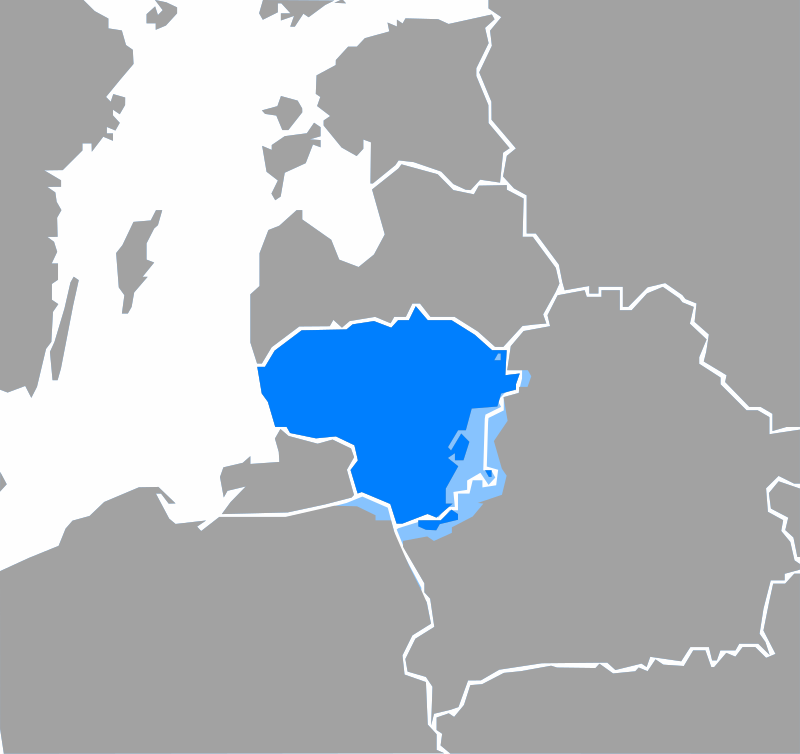
Lithuanian native speakers
Lithuanian native speakers: 3.0 million (2012).
Lithuanian language code
Lithuanian language code is: lt.
Conclusion on Funeral knell in Lithuanian
Now that you have learned and understood the common ways of saying Funeral knell in Lithuanian is "laidotuvių varpai", it's time to learn how to say Funeral knell in Lithuanian. This will hopefully give you a little motivation to study Lithuanian today.
laidotuvių varpai in Lithuanian meanings Funeral knell in English.