
Femur in Bulgarian
Do you know Femur in Bulgarian? How to use Femur in Bulgarian and how to say Femur in Bulgarian? How to write Femur in Bulgarian? Now let's learn how to say Femur in Bulgarian language.
Femur translate to Bulgarian meanings: бедрена кост.
In other words, бедрена кост in Bulgarian is Femur in English.Click to pronunce
| English | Bulgarian |

|
|
| Femur | бедрена кост |
How to use Femur in Bulgarian?
Meaning of Femur in Bulgarian language is: бедрена кост.
Examples of "Femur" in Bulgarian language
- femur [N]: He fractured his left femur in the fall at college
Other words in Bulgarian
Farsightedness, Fibril, Fictile, Fosse, Forbade,
Read more Synonyms and Antonyms of Femur
Why we should learn Bulgarian language?
There are many, many reasons why learning a new language is a good idea. It allows you to communicate with new people. It helps you to see things from a different perspective, or get a deeper understanding of another culture. It helps you to become a better listener. It even has health benefits, as studies have shown that people who speak two or more languages have more active minds later in life!
7 reasons to learn a Bulgarian language
- Makes you smarter.
- Boosts academic achievement.
- Provides professional and career advantages.
- Provides broader access to education and information.
- Gives you more social and global skills.
- Increases national security.
- Life is more interesting.
How to say Femur in Bulgarian?
бедрена кост. This is your most common way to say Femur in бедрена кост language. Click audio icon to pronounce Femur in Bulgarian::
| English | Bulgarian |
|
|
|
| Femur | бедрена кост |
How to write Femur in Bulgarian?
The standard way to write "Femur" in Bulgarian is: бедрена кост
Alphabet in Bulgarian
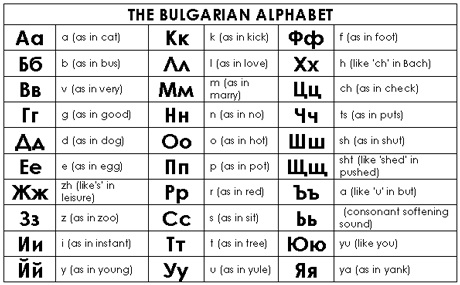
About Bulgarian language
See more about Bulgarian language in here.
Bulgarian (/bʌlˈɡɛəriən/ (audio speaker iconlisten), /bʊlˈ-/ bu(u)l-GAIR-ee-ən; български, bălgarski, pronounced [ˈbɤɫɡɐrski] (audio speaker iconlisten)) is a South Slavic language spoken in Southeastern Europe, primarily in Bulgaria. It is the language of the Bulgarians.
Along with the closely related Macedonian language (collectively forming the East South Slavic languages), it is a member of the Balkan sprachbund and South Slavic dialect continuum of the Indo-European language family. The two languages have several characteristics that set them apart from all other Slavic languages; changes include the elimination of case declension, the development of a suffixed definite article and the lack of a verb infinitive. They retain and have further developed the Proto-Slavic verb system (albeit analytically). One such major development is the innovation of evidential verb forms to encode for the source of information: witnessed, inferred, or reported.
It is the official language of Bulgaria, and since 2007 has been among the official languages of the European Union. It is also spoken by minorities in several other countries.
.Writing system in Bulgarian
Cyrillic (since 893) (Bulgarian alphabet), Bulgarian Braille Latin (Banat Bulgarian Alphabet)
Bulgarian Speaking Countries and Territories
Bulgarian Speaking Countries and Territories: Bulgaria, Albania, Greece, Romania, North Macedonia,Moldova, Serbia, Turkey, Ukraine.
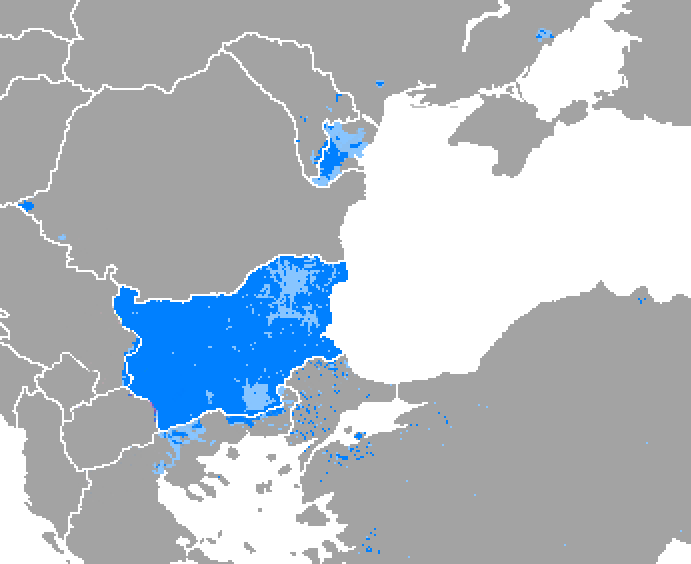
Bulgarian native speakers
Bulgarian native speakers: 8 million.
Bulgarian language code
Bulgarian language code is: bg.
Conclusion on Femur in Bulgarian
Now that you have learned and understood the common ways of saying Femur in Bulgarian is "бедрена кост", it's time to learn how to say Femur in Bulgarian. This will hopefully give you a little motivation to study Bulgarian today.
бедрена кост in Bulgarian meanings Femur in English.